PizzaGoGo
Industry
Food Manufacturing
Agency
Pixelfield
Client
PizzaGoGo
My role
Product designer
Timeline
2024-2025
Deliverables
App design
Branding
Good pizza, great experience.
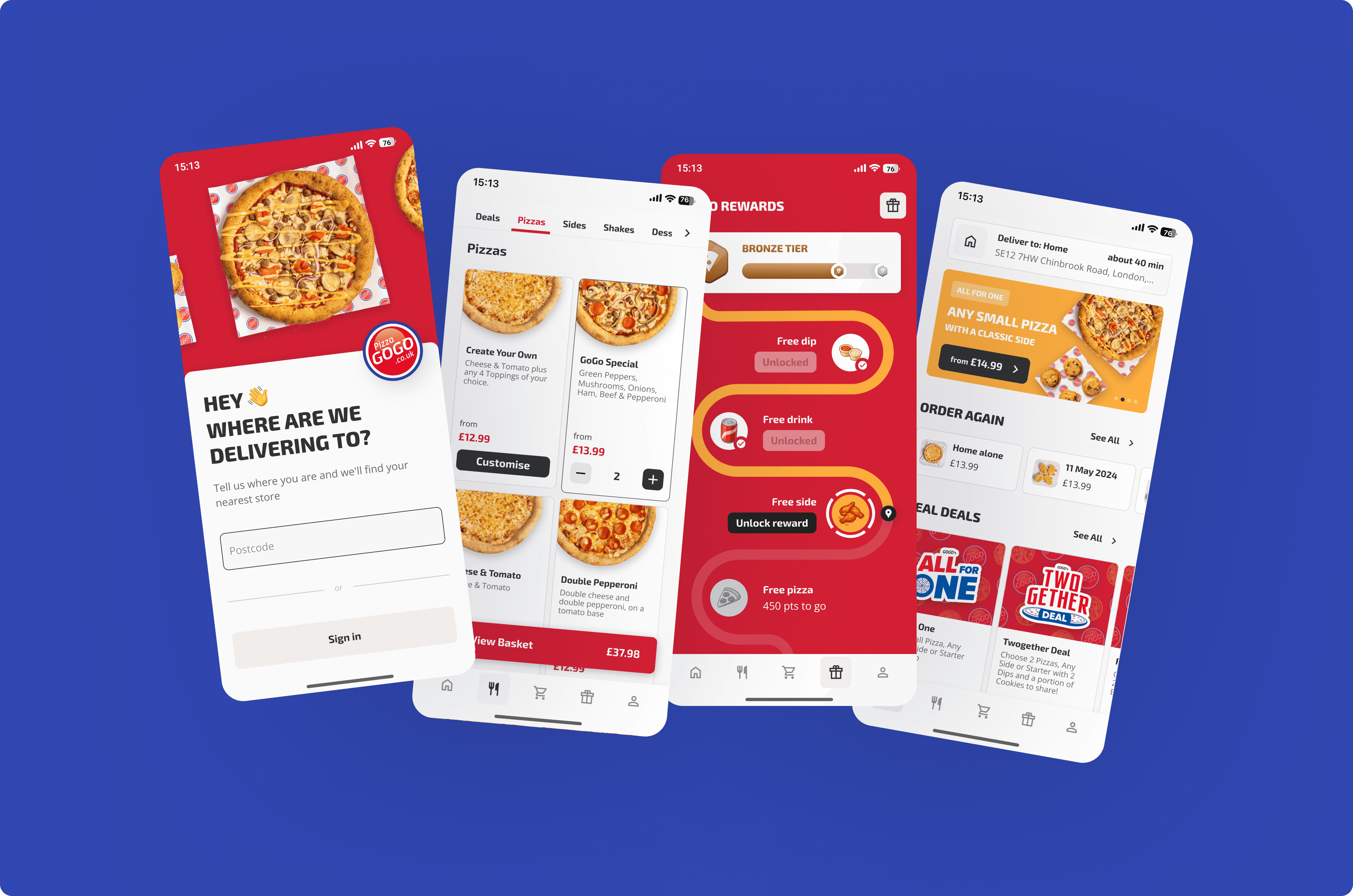
PizzaGoGo, a popular UK pizza chain, had an outdated mobile app that merely mirrored its website and lacked functionality. The client sought a full redesign that would provide a modern, engaging, and user-friendly experience, positioning the app as a competitive channel for customer retention and sales growth.
The new app needed to stand apart through unique features like gamified loyalty, simplified ordering, and live order tracking — all while staying visually aligned with the brand’s upcoming web redesign.
Good pizza, great experience.
Read more
(05)
Design Process
My design process followed an agile, user-centered approach, ensuring each phase aligned with both business goals and user needs.
01
Research
Survey
User interview
Competitive analysis
02
Define
Persona
Sitemap
User flow
03
Ideation
Visual direction
Wireframing
04
Prototype
Design system
Hi-fi design
05
Test
Usability testing
A/B testing
(04)
Research Results
Early research helped us surface real pain points and refine our understanding of the people we were truly designing for.
01
Poor ordering experience
The current ordering flow is outdated, not mobile-friendly, and makes it difficult for users to browse, customize, and complete their orders efficiently.
02
No tracker
Users feel uncertain after placing an order because they cannot track the order status, estimated delivery time, or real-time progress.
03
No loyalty features
There is no sense of reward or recognition for repeat customers, resulting in low retention and weak brand loyalty.
04
Outdated visual design
The interface looks visually dated and lacks clarity, reducing brand credibility, user trust, and overall engagement.
(02)
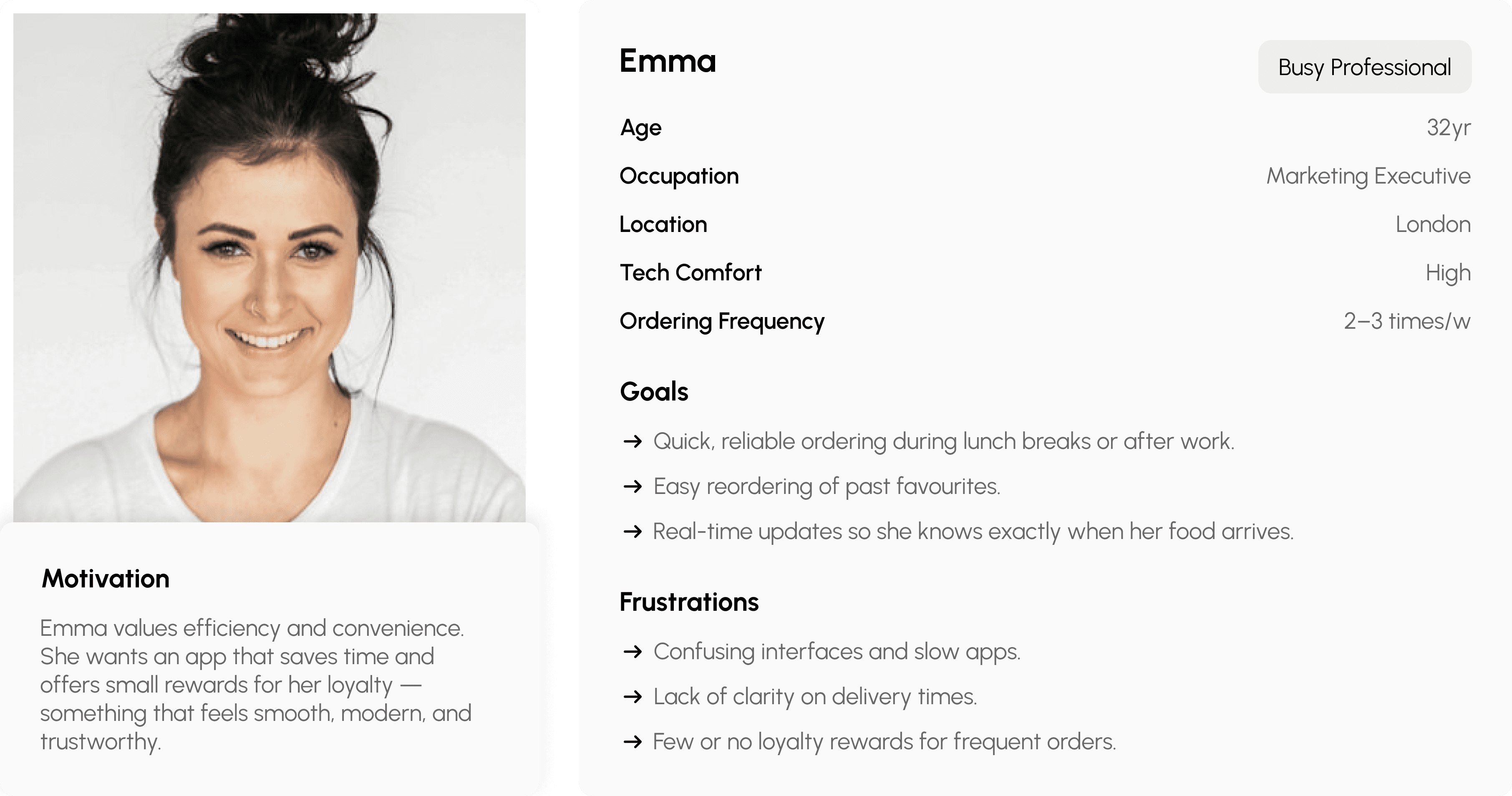
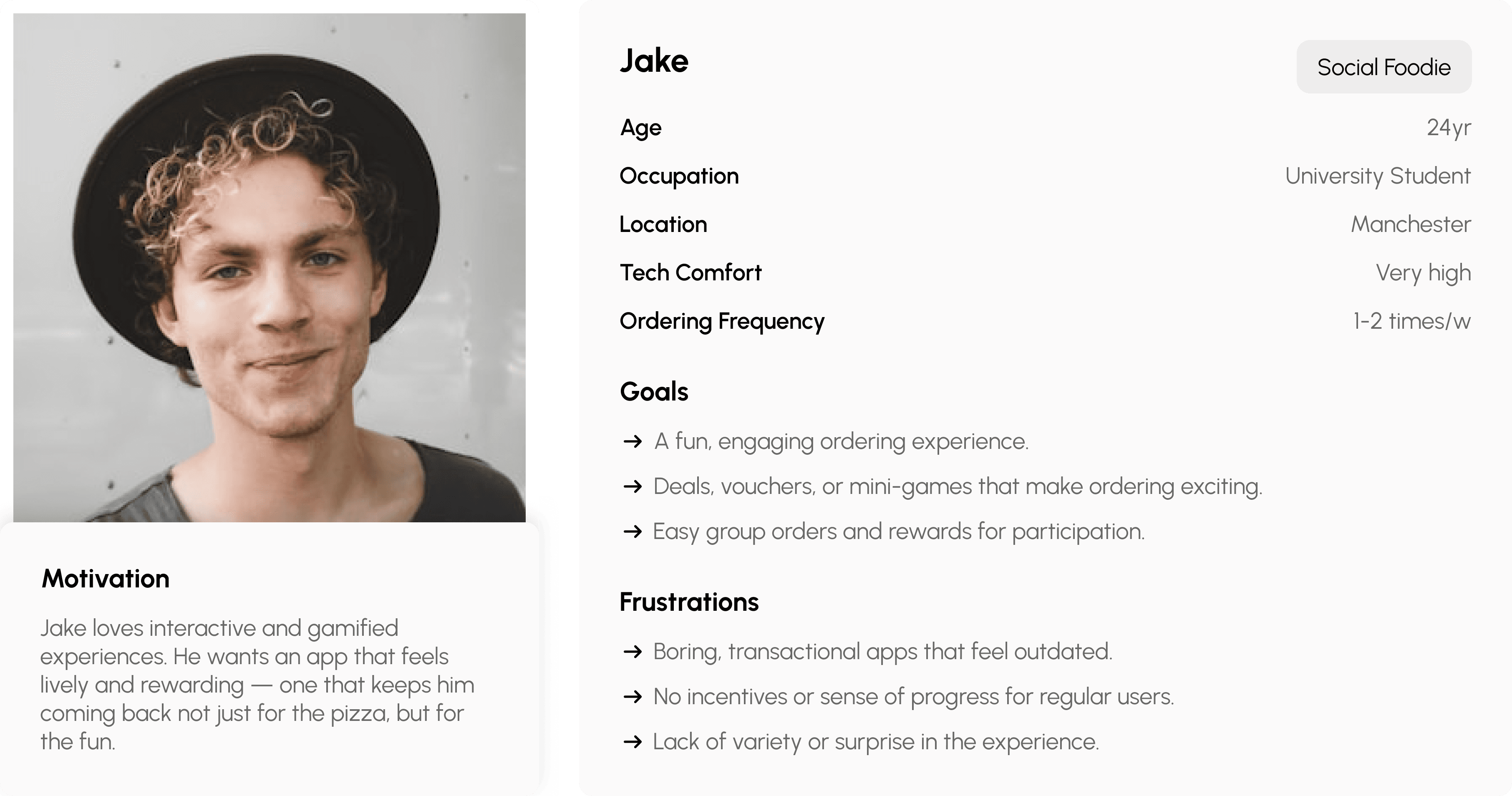
Target Audiences
(01)
Problem Statement
Users face challenges in browsing, customizing, and ordering due to an outdated interface, limited transparency, and insufficient support, which undermines usability and trust. The lack of a loyalty or reward system results in low motivation for repeat purchases, weakening customer retention and long-term brand engagement.
(04)
Solutions
01
Order flow redesign
We analyzed the existing menu structure and reorganized the hierarchy to improve clarity, allowing users to customize their pizzas with greater control and transparency.
02
Order tracking and support
Users need clear post-order tracking with status updates, guidance, and accessible customer support, extending beyond order completion.
03
Gamified loyalty program
The loyalty program needs an more gamified and rewarding mechanism that keeps users coming back, redeeming offers, and continually engaging with the app.
04
Updated visual direction
We need to evolve the visual direction to better resonate with a younger audience, without losing the brand’s original essence—friendly, budget-friendly, and family-oriented.
Hi-fi
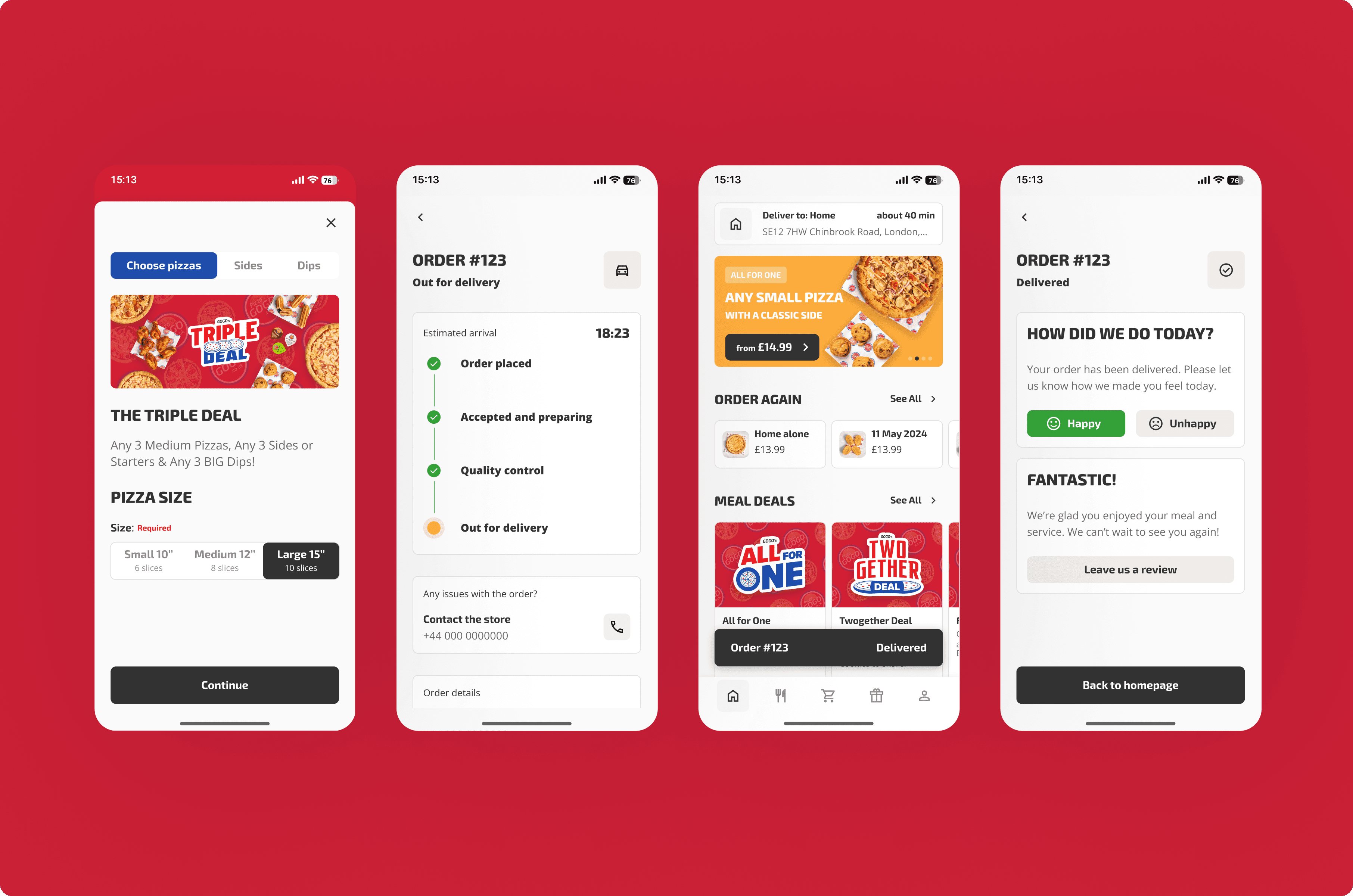
Place & Track Order
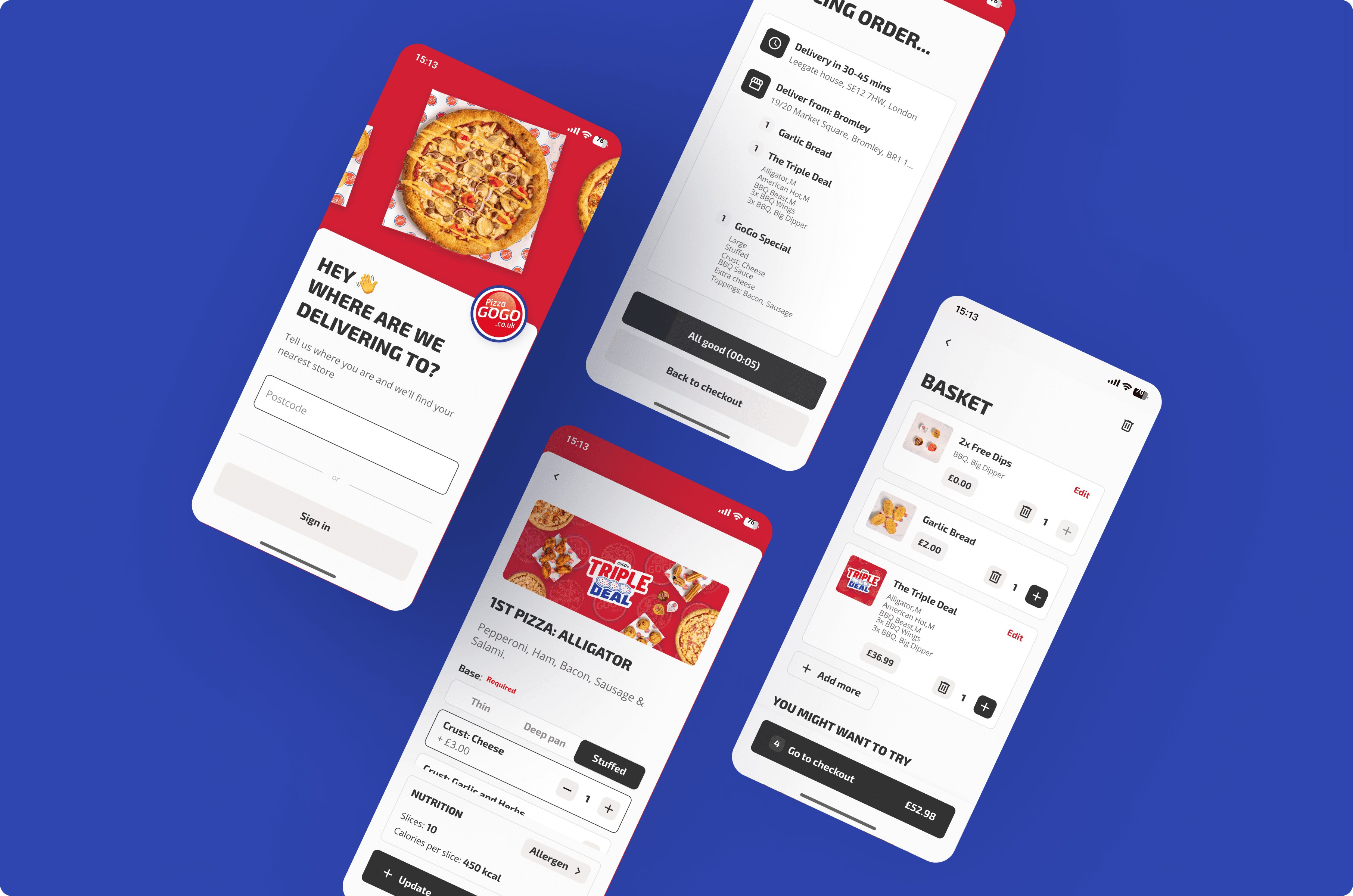
We redesigned the menu pages and order tracking interface, defining the user journey from “Order Placed” to “Delivered.” The emphasis was on clarity and anticipation management — ensuring users always understood their order status in real time, even without a live map.
Hi-fi
Loyalty Program
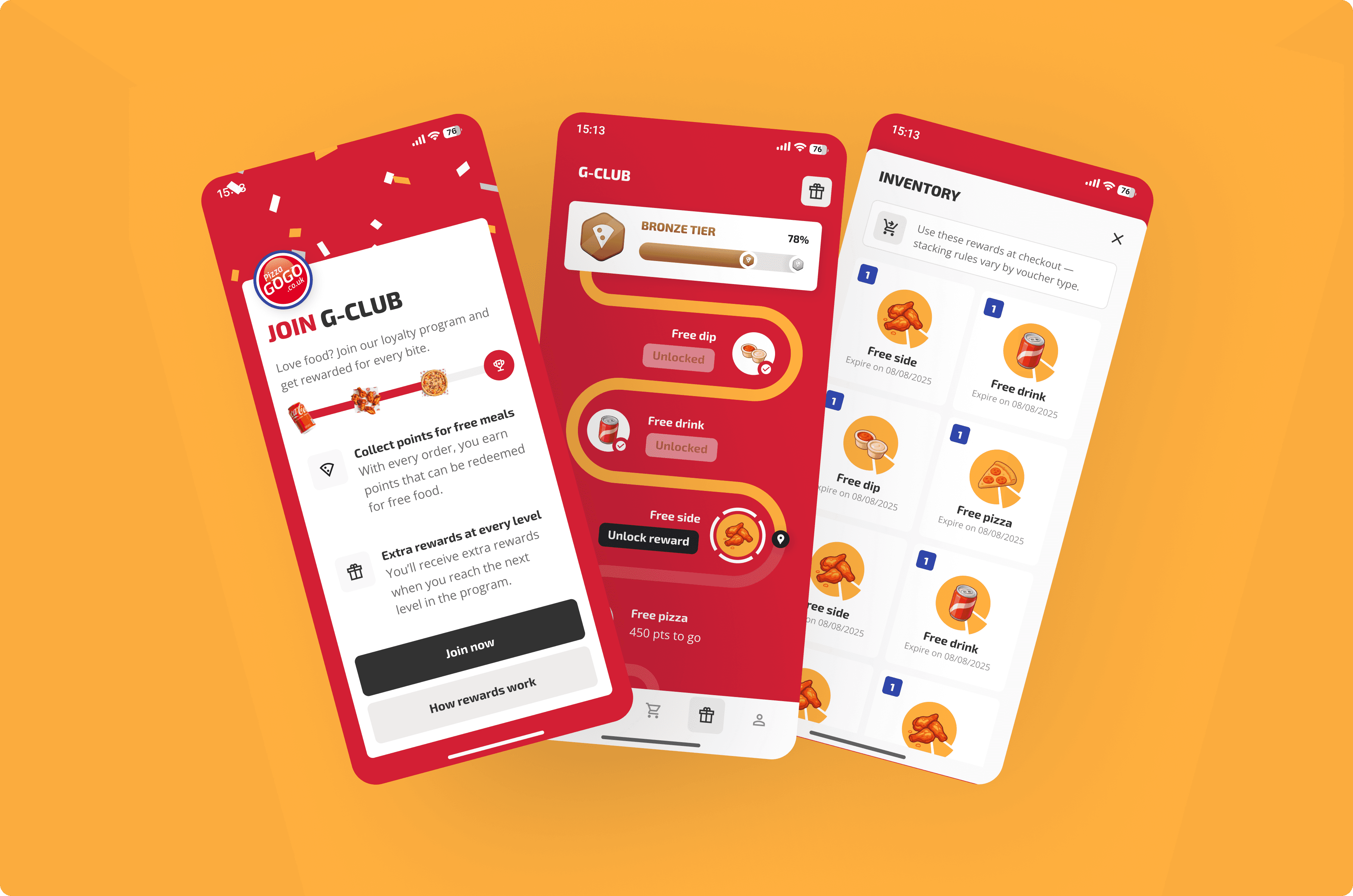
We explored two loyalty directions: a mini-game where users collect items on a delivery journey, and a tiered bronze-silver-gold reward system. Both options were tested with user feedback to assess engagement potential and visual appeal.
Test revealed that users expect both long-term point accumulation for loyalty progression and short-term rewards that encourage frequent engagement with the app.

“If I’m ordering often, I want to feel like it’s worth it. Something like collecting points toward a big reward, but also little discounts or surprises along the way to keep me coming back.”
Hi-fi
Redefined visual direction
We developed a refreshed design system for PizzaGoGo that preserves its core brand values—friendly, affordable, and family-oriented—while modernizing the visual language. The system uses the original brand colors and identity, but extends them with scalable components that can be applied across future web experiences and marketing campaigns.
This approach aims to not only strengthen brand consistency but also make the identity more appealing to a younger audience.
Summary & takeaways
Working with a well-established brand like PizzaGoGo taught me how to balance creativity with respect for brand heritage. It was both challenging and rewarding to reimagine their visual identity — making it more modern and playful while staying true to what defines them: being cost-effective, accessible, and fast.
I also learned how to balance creativity with practicality. Working within tight budgets and timelines taught me the importance of staying focused on user goals — making sure every design decision delivers real value without unnecessary complexity.
Especially with gamification, I realised that success doesn’t always come from big, elaborate ideas; sometimes, a simple, well-executed interaction can be just as powerful.
What's next?
The design may be done, but the job is far from complete. As designers, we care about every step — from start to finish.
More Projects

Think we are
a good match ?