Avatid
Industry
Appointment services
Agency
Pixelfield
Client
Avatid
My role
Product designer
Timeline
2024-2025
Deliverables
App design
Branding
Avatid – Your Life, Organized.
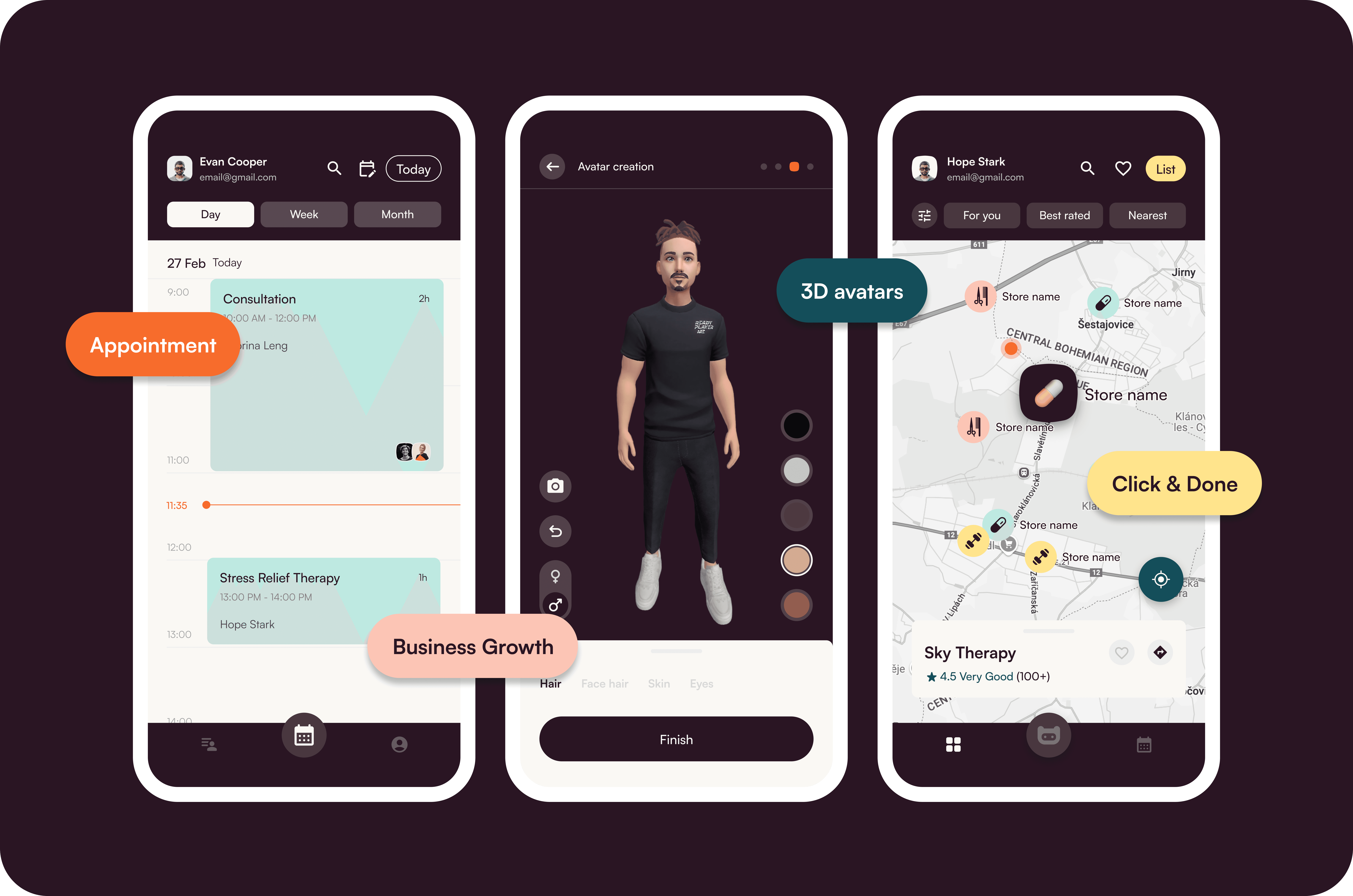
Avatid is a subscription-based booking platform that connects users with service providers such as barbers, salons, dentists, and wellness experts. What makes it stand out is its use of customisable digital avatars — visual representations that evolve over time to remind users of their next appointments.
Designed for global scalability, Avatid will first launch in the UK and Albania, focusing on a seamless, personalised, and joyful booking experience for both customers and service providers.
(05)
Design Process
My design process followed an agile, user-centered approach, ensuring each phase aligned with both business goals and user needs.
01
Research
Survey
User interview
Competitive analysis
02
Define
Persona
Sitemap
User flow
03
Ideation
Visual direction
Wireframing
04
Prototype
Design system
Hi-fi design
05
Test
Usability testing
A/B testing
(02)
Research Results
Early research helped us surface real pain points and refine our understanding of the people we were truly designing for. We began with extensive competitive research, analysing major players like Booksy, Treatwell, and Fresha. While most offered standard scheduling tools, few delivered emotional engagement or visual personalisation. This gap inspired the concept of avatars as booking companions, turning routine appointments into a personalised experience.
01
For customers:
Booking platforms feel functional but emotionless, offering no sense of connection or personalization.
Hard to know when to book again (haircut, manicure, skincare) without real-life cues.
Uncertainty when choosing providers—unclear quality, credibility, or service results.
02
For service providers:
Needs go beyond simple booking—providers require tools for pricing, scheduling, income tracking, and workload management.
Frequent misunderstandings due to unclear service details and non-standard communication (often through WhatsApp).
Language barriers make text-heavy systems difficult, especially for non-native English speakers.
Hard to build long-term customer relationships—platforms do not help strengthen trust or increase repeat bookings.
(02)
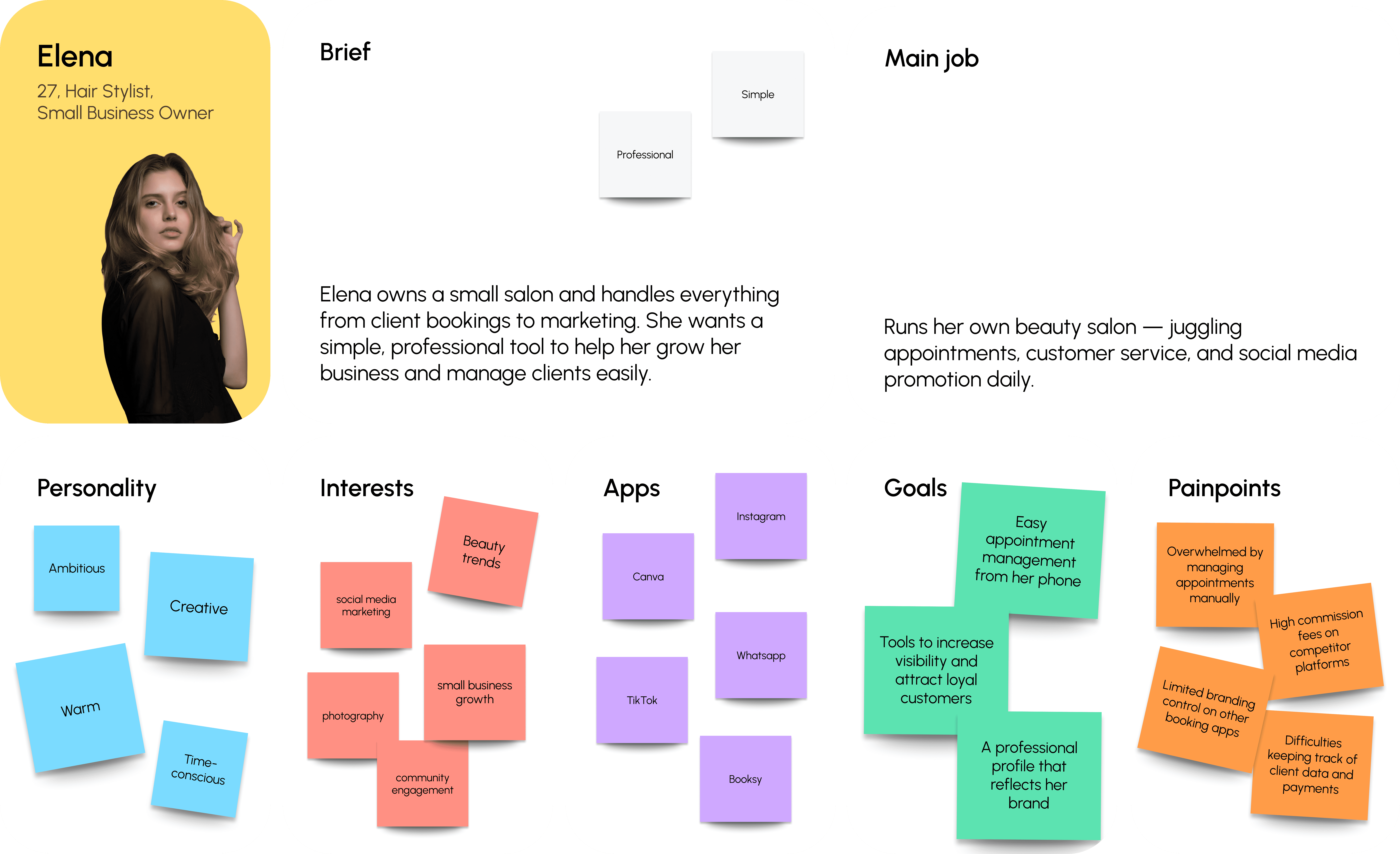
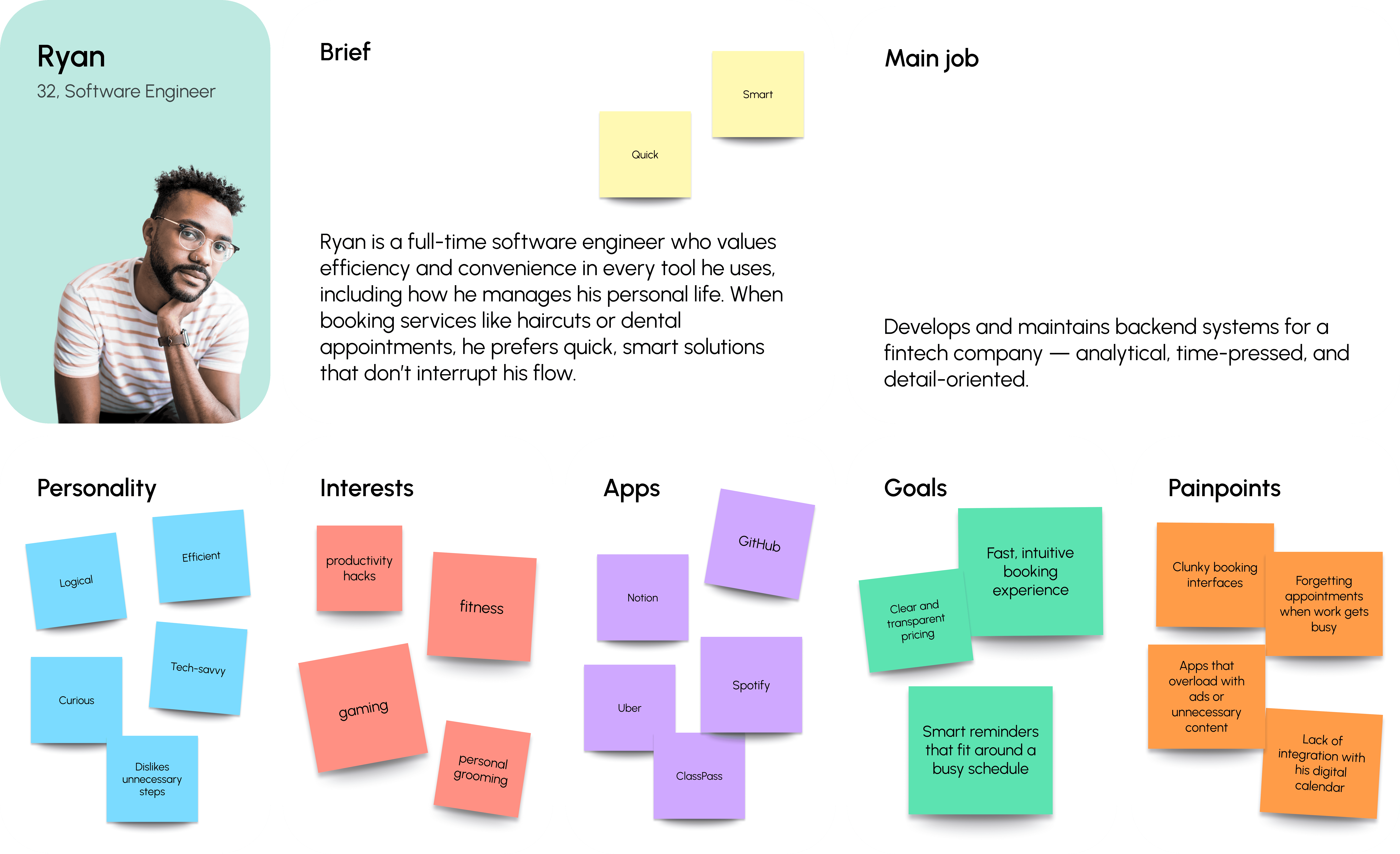
Target Audiences
(01)
Problem Statement
Users lack an emotionally engaging and trustworthy way to manage recurring self-care appointments. Existing booking platforms are purely functional, offer weak reminders, and fail to build personal connection or long-term retention—while service providers still require a professional and flexible system to manage bookings, pricing, and customer relationships.
(04)
Solutions
01
From Tool to Emotional Experience
Transform Avatid from a basic booking tool into an emotional companion by using a 3D avatar that visually reflects the user’s real-life condition, creating personal relevance and emotional engagement rather than just push notifications.
02
Dual Experience for Users and Providers
Design two tailored experiences: a light, fast, and intuitive flow for customers, and a more robust, professional interface for service providers with scheduling, pricing, and management tools.
03
Scalable and Localizable System
Build a flexible design system that supports multiple languages, cultural preferences, and service categories—making the platform adaptable for future regions and industries.
04
Brand as a Warm, Trustworthy Experience
Establish a visual and interaction style that balances technology with warmth and humanity, making the platform feel not just functional, but caring, reliable, and personal.
Visual
Visual Direction
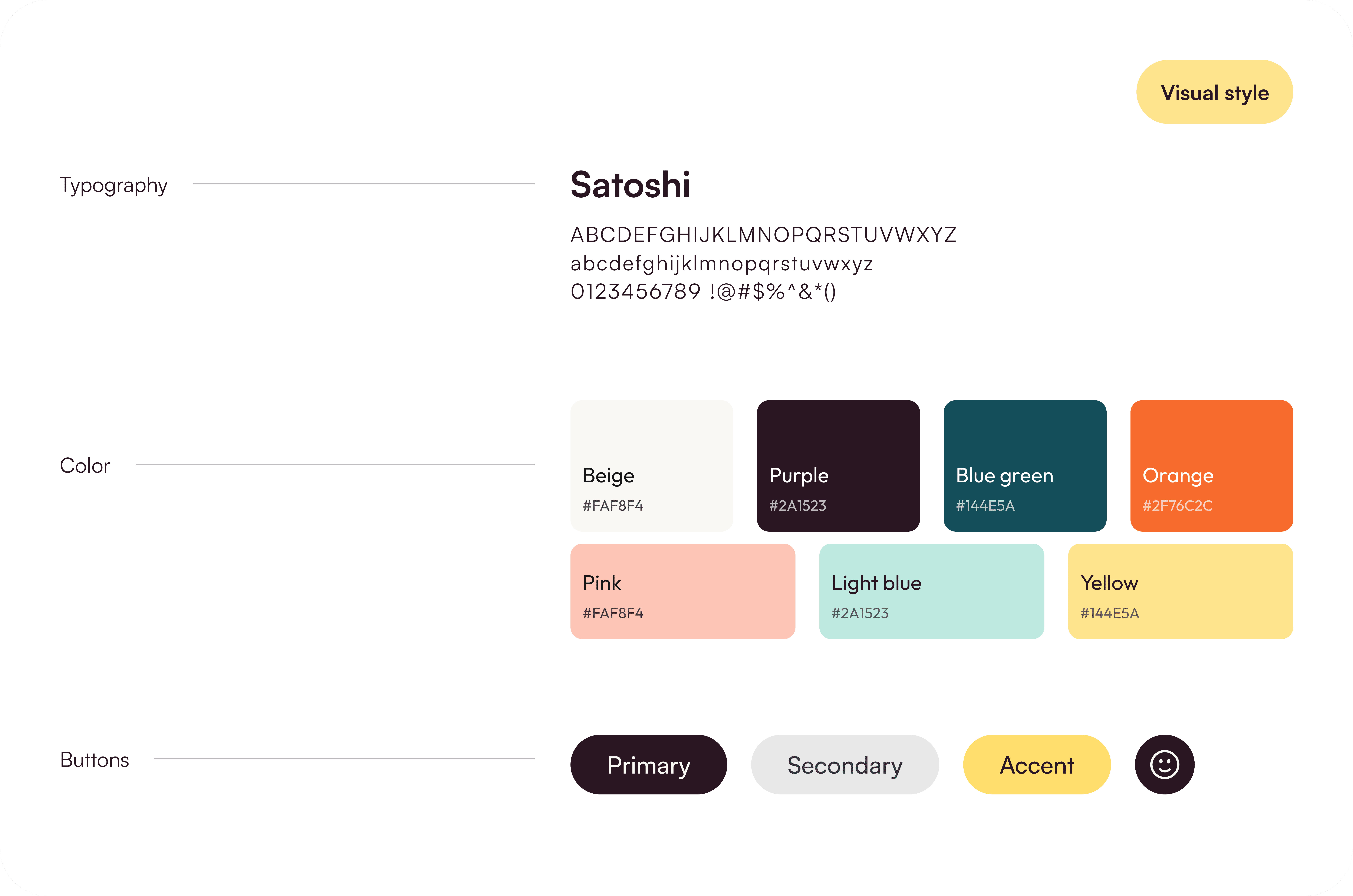
We designed a visual system that strengthens Avatid’s brand identity while remaining adaptable for different service providers using the platform. Each service category is assigned its own color for distinction, while a unified brand color ensures clarity, consistency, and strong visual hierarchy across information-heavy interfaces.
Hi-fi
Avatar Creation
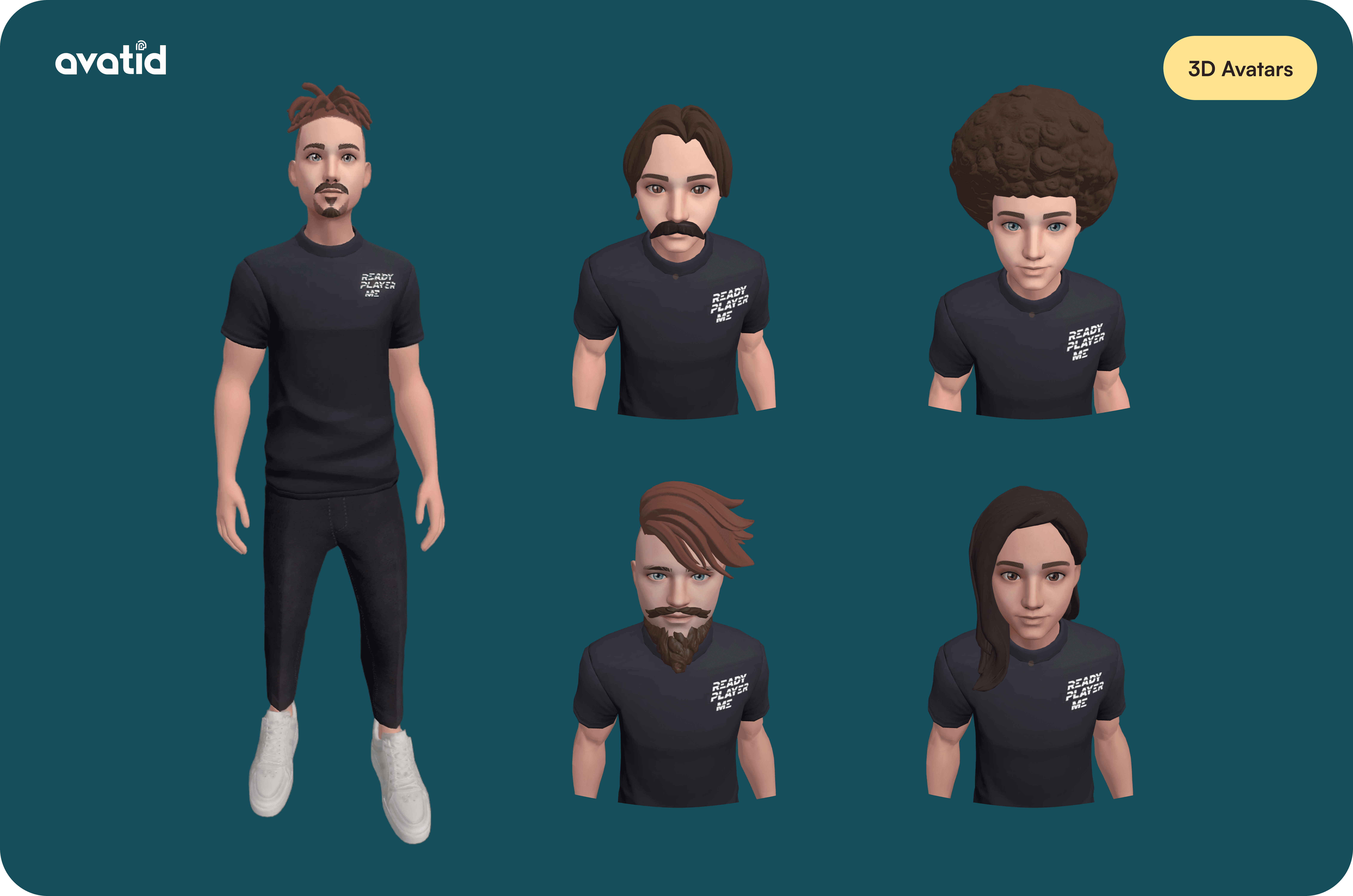
The core experience of the app is allowing users to create a personal 3D avatar that reflects their real-life appearance and condition. The avatar evolves over time based on the user’s real-life status—such as hair growth, nail length, or skin condition.
We designed the avatar creation flow to be as simple and intuitive as possible while still offering enough flexibility for users to create an avatar that genuinely represents themselves.

We collaborated with Avaturn, integrating their 3D avatar technology to make customisation smooth and lightweight. Avatars visually change over time — longer hair, nail growth — offering subtle reminders that it’s time for a new appointment. This approach adds playfulness and emotional resonance to an otherwise functional experience.
Hi-fi
Booking Routine
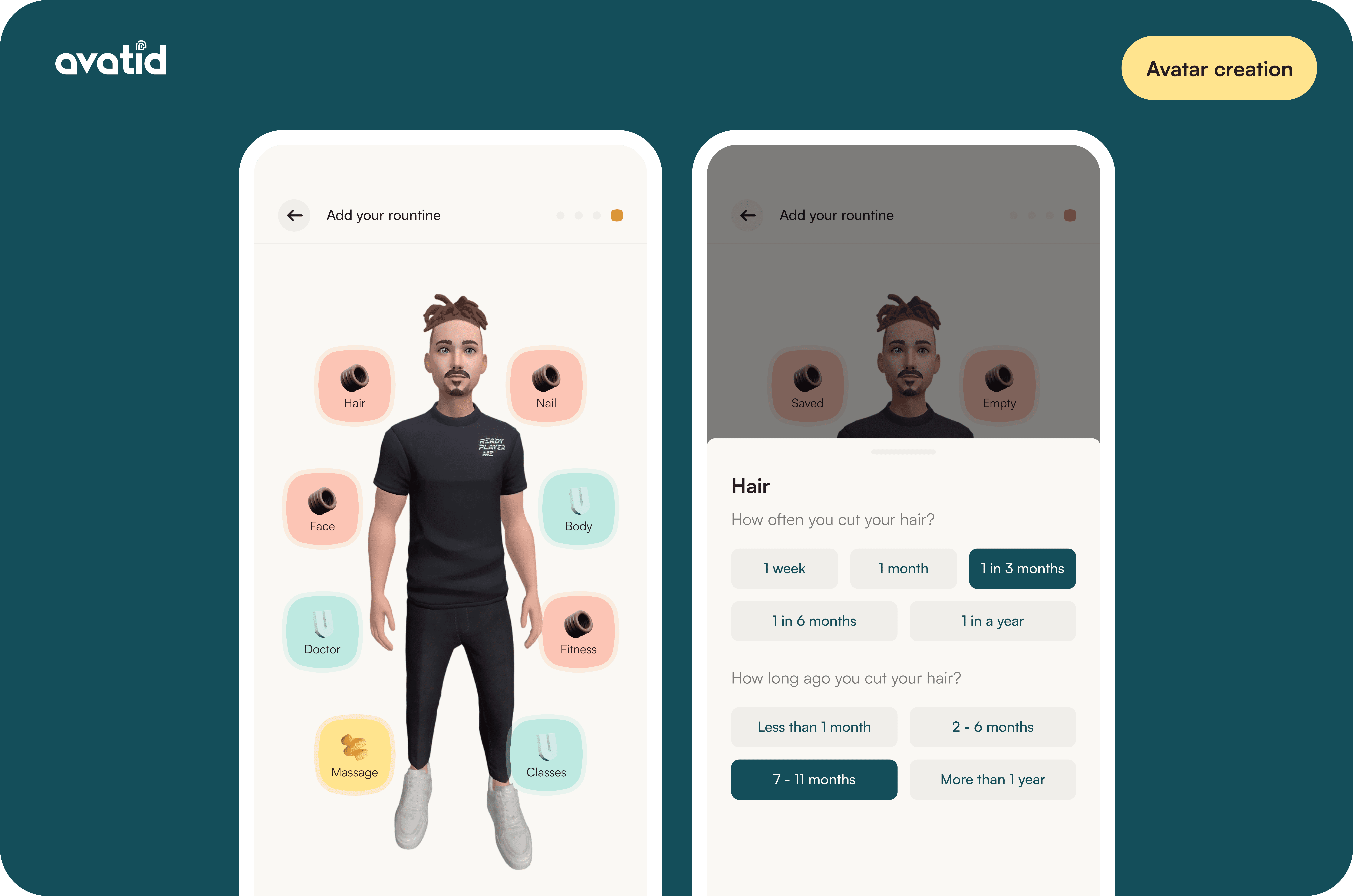
Users can set their preferred service frequency across eight categories—hair, nails, face, body, doctor visits, fitness, massage, and physiotherapy. The avatar then visually reflects their real-life needs by changing its appearance over time, acting as a personalized, emotional reminder for users to book their next appointment.
Hi-fi
Booking Routine
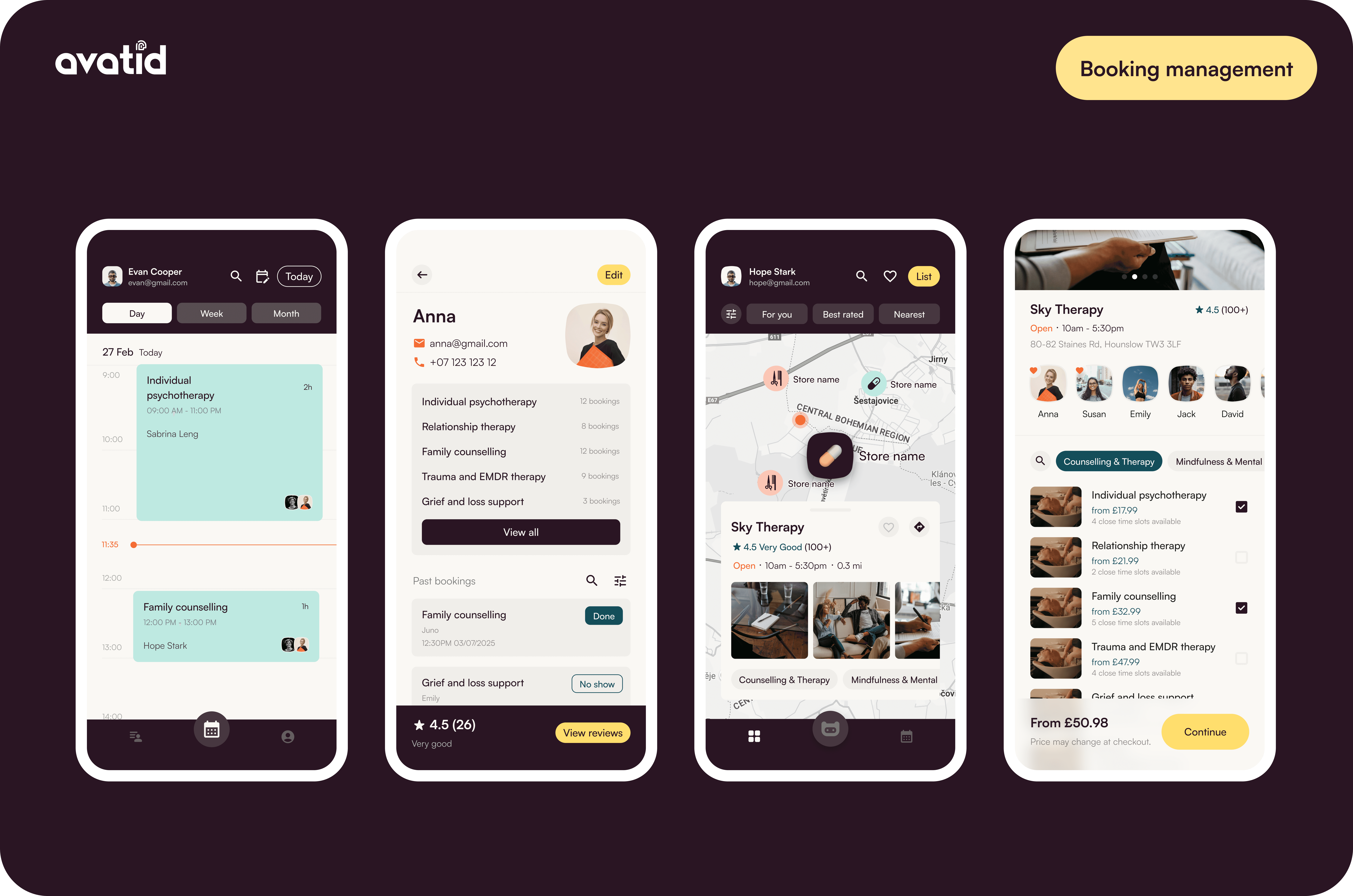
Our biggest challenge was designing a system that served both business owners and customers equally well. For providers, we simplified service listings, appointment management, and subscription setup. For users, we focused on a frictionless journey — search, compare, book, and track — all in a few taps.
Summary & takeaways
Designing Avatid was an exciting challenge that combined functional UX thinking with creative innovation. Working on a platform that merges appointment booking with personalisation pushed me to think beyond convenience — toward connection.
The avatar feature wasn’t just a visual gimmick; it became a way to build empathy and anticipation. Watching users form emotional bonds with their avatars revealed how digital design can make even routine actions feel meaningful and fun.
I also learned how important it is to design for cultural adaptability and inclusivity. Launching in both the UK and Albania meant understanding two very different user contexts — different tech literacy levels, languages, and expectations. This helped me refine the product’s tone, visuals, and interaction patterns to make it feel approachable everywhere.
Avatid reminded me that great design happens when technology serves emotion. It’s not just about making tasks easier, but about making them more human — personal, delightful, and worth returning to.
What's next?
The design may be done, but the job is far from complete. As designers, we care about every step — from start to finish.
More Projects


Think we are
a good match ?